At this point in time I'd like to take a little break from discussing individual albums from the mid to late 1960s and discuss instead the merits (or otherwise) of stereo and mono recordings.
Way back in the mists of time (the 1950s and early 1960s) things were pretty straight forward. Most homes that owned a record player or the larger piece of furniture which generally housed a turntable and a radio (called a monogram), had one speaker through which to play their choice of music. Consequently records were produced in monaural sound meaning that everything came through one channel and came into the room via the one speaker.
When stereo sound became more common and people obtained pieces of furniture with two speakers (yes, you've guessed it - they were called stereograms) it was then possible to hear different sounds from each of the speakers. However, even then most records were produced for mono sound and a separate mix would be made for the stereo market as these sold in smaller numbers. Consequently the stereo separation would tend to be fairly basic, often as basic as having the voices coming from one channel and the instruments coming from the other. For example, stick the stereo version of the second UK album by The Beatles ('With The Beatles') on the turntable or into your CD player. Now listen to track 1, 'It Won't Be Long'. You will notice voices from the right speaker and generally all the instruments from the left which is fine unless you choose to listen through headphones or earphones when it can be a bit disconcerting.
As time went on, stereo systems became more common and consequently more time and effort was put into making the stereo mix of the song or songs. This all started to happen around the mid 1960s which just happens to be the period we are dealing with in this blog. So we occasionally have to make the choice between the stereo or the mono mix of a piece of work.
But which is better, I hear you ask.
Well you will be disappointed to learn that there is no clear cut answer to that question. It comes down to a matter of choice. Personally, my preference for those early 1960s albums by the likes of The Beatles or Bob Dylan is for the mono version. For the mid 1960s period it is not so clear cut and both stereo and mono have their merits but can sometimes be quite different. Albums that we have already discussed such as 'Pet Sounds', 'Revolver' or 'Blonde On Blonde', sound to my ears great in both mono and stereo. Moving a couple of years further on to the album 'The Beatles' (universally known as The White Album) and I find that I prefer some songs in stereo and some in mono. In some cases they are very different, none more so than 'Helter Skelter' which in mono does not have the false ending and is subsequently about a minute shorter than the stereo version.
So it is a matter of personal choice whether you go for mono or stereo versions. However there are exceptions, and I would say without any hesitation that the next album I will be looking at, should definitely be heard in mono.
Join me then and I will explain why.
Monday, 18 March 2013

Wednesday, 13 March 2013
The Kinks - Face To Face
With the 28 October 1966 release of 'Face To Face', The Kinks finally released the kind of album that their single releases hinted they were capable of. It was also their first album consisting entirely of self-written material.
Beginning 1966 with the February single release of 'Dedicated Follower Of Fashion', they followed that with 'Sunny Afternoon' on 3 June. It was clear that the songwriting of Ray Davies was developing nicely and boded well for the new album release. Despite suffering somewhat from being issued in the wake of 'Pet Sounds' and 'Revolver', there is no doubt that 'Face To Face' is a wonderful piece of work and it represents the high point in the career of The Kinks up to that point in time.
As the main recording sessions for the album began in June 1966, Ray Davies was about to celebrate his 22nd birthday and was in the process of recovering from a nervous breakdown. The endless touring, writing, recording and the responsibility of being married with a young daughter had taken their toll on this young man. Nevertheless his songs were showing a greater sense of maturity coupled with finely tuned social awareness. The situation was not helped when bass player Pete Quaife quit the band prior to the commencement of the sessions. He subsequently returned to the fold but was replaced on one track by John Dalton.
For the album sessions, the basic line-up of Ray Davies, his brother Dave, Pete Quaife and Mick Avory were augmented by NIcky Hopkins on keyboards and backup vocals from Rasa Davies, the wife of Ray.

'Party Line'
I suppose for the benefit of younger readers, I should first explain what a party line was. Basically in the 1950s and 1960s there was an opportunity to save costs by sharing a telephone line with another subscriber. This could result in the scenarios described in the song whereby one user picked up the receiver to make a call and could hear the other user having a conversation. I daresay it could lead to some awkward situations and sounds perfect for eavesdroppers.
The song begins with the ringing of a telephone and a plummy voice answering 'Hello, who's that speaking please?' The voice is that of Kinks manager, Grenville Collins. A theme Davies envisaged for the whole album, was to have the tracks linked by sound effects. The idea was later dropped but some of the effects do survive.
In his book 'Kink', Dave Davies claimed that he was the writer of this song.
'Rosie Won't You Please Come Home'
The song represents a plea from a mother for the return of her daughter who has left home to 'join the upper classes'. It is made even more poignant by the fact that Davies' sister Rosie had left London and was living in Australia at the time. This is the first truly great song on the album.
'Dandy'
With this number, married man Davies takes a pop at those who are obsessed with 'chasing all the girls' and refuse to settle down. The lyrics warn that 'two girls are too many, three's a crowd and four you're dead.' The sentiments may have been aimed at Dave Davies who at the time was happy to enjoy the wild and free lifestyle of the 'pop star'. Whoever the target, at least Davies ends with the cry of 'Dandy you're alright'.
The song was also released as a 1966 single by The Rockin' Vickers featuring Lemmy prior to his Hawkwind days.
'Too Much On My Mind'
Another superb song which perhaps represents the state of mind of Ray Davies as he went through his breakdown. 'It's ruining my brain, I'll never be the same, my poor demented mind is slowly going.'
Who'd be a rock star?
'Session Man'
Nicky Hopkins who adds some wonderful keyboards to this album and plays the fast paced introduction, was said to be the subject of this song. Full of little in-jokes, Davies sings 'He's not paid to think, just play.'
'Rainy Day In June'
The sound of thunder introduces this song which begins as a doom laden tale of a bad day in June. With 'misty shadows', disappearing light and skies turning grey, 'there is no hope of reasoning'. Later the lyrics turn a tad more supernatural with 'cherished things perishing' and 'elves and gnomes hunched in fear.' Throughout, the music sets the tone as do the thunderous sound effects best heard in mono.
'A House In The Country'
Musically the band return here to their Chuck Berry roots while lyrically Davies attacks the smug stock-broker belt anti-hero who is 'socially dead' but it 'don't matter much to him, 'cos he's got a house in the country.'
The Pretty Things also scored a hit with a single release of this song.
Side two of the album begins with more sound effect to introduce:
'Holiday In Waikiki'
My least favourite track on the album so I have little to say about this song which is self explanatory anyway.
'Most Exclusive Residence For Sale'
Perhaps this is the anti-hero of 'A House In The Country' getting his comeuppance.
'Fancy'
Starting with acoustic guitar reminiscent of The Rolling Stones' 'Lady Jane', this song is built around an Indian type drone and the brief lyrics are largely impenetrable. Perhaps that's the point as Davies sings in the second and final verse, 'No one can penetrate me.'
'Little Miss Queen Of Darkness'
This is the track that features John Dalton on bass in place of Pete Quaife. An acoustic ragtime number, it tells the story of a good time girl who looked happy but had 'sadness in her eyes'. Things weren't all they appeared to be it seems.
'You're Looking Fine'
Dave Davies takes the lead vocals on this track which sounds like a cross between The Rolling Stones and Van Morrison's early band, Them. Not the greatest song on the album but it does feature nice bluesy guitar from the younger Davies (not even 20 years old by this time) and piano from Hopkins.
'Sunny Afternoon'
A standout track both musically and lyrically in which Ray Davies vents his frustration at the British Income Tax system in much the same way George Harrison had with 'Taxman'.
The single version spent a couple of weeks at number 1 in the UK earning even more money for the taxman.
'I'll Remember'
Coming as it does after 'Sunny Afternoon', this song was never going to sound great, but it is actually something of an oddity on this album as it originates from the October 1965 sessions for their previous work, 'The Kink Kontroversy'.
The cover design for the album originated with an idea of Ray Davies in which he envisaged a theatrical mask with the top of the face lifted to allow butterflies to escape. The actual release of the album was delayed by a few months due to a contractual dispute with Pye Records. Nevertheless it was critically acclaimed yet possibly due to the wealth of other great material being released at that time, the sales were relatively poor. With subsequent CD releases including stereo and mono mixes and a number of session outtakes, the album is at last being lauded as the great work it truly is.
Beginning 1966 with the February single release of 'Dedicated Follower Of Fashion', they followed that with 'Sunny Afternoon' on 3 June. It was clear that the songwriting of Ray Davies was developing nicely and boded well for the new album release. Despite suffering somewhat from being issued in the wake of 'Pet Sounds' and 'Revolver', there is no doubt that 'Face To Face' is a wonderful piece of work and it represents the high point in the career of The Kinks up to that point in time.
As the main recording sessions for the album began in June 1966, Ray Davies was about to celebrate his 22nd birthday and was in the process of recovering from a nervous breakdown. The endless touring, writing, recording and the responsibility of being married with a young daughter had taken their toll on this young man. Nevertheless his songs were showing a greater sense of maturity coupled with finely tuned social awareness. The situation was not helped when bass player Pete Quaife quit the band prior to the commencement of the sessions. He subsequently returned to the fold but was replaced on one track by John Dalton.
For the album sessions, the basic line-up of Ray Davies, his brother Dave, Pete Quaife and Mick Avory were augmented by NIcky Hopkins on keyboards and backup vocals from Rasa Davies, the wife of Ray.
'Party Line'
I suppose for the benefit of younger readers, I should first explain what a party line was. Basically in the 1950s and 1960s there was an opportunity to save costs by sharing a telephone line with another subscriber. This could result in the scenarios described in the song whereby one user picked up the receiver to make a call and could hear the other user having a conversation. I daresay it could lead to some awkward situations and sounds perfect for eavesdroppers.
The song begins with the ringing of a telephone and a plummy voice answering 'Hello, who's that speaking please?' The voice is that of Kinks manager, Grenville Collins. A theme Davies envisaged for the whole album, was to have the tracks linked by sound effects. The idea was later dropped but some of the effects do survive.
In his book 'Kink', Dave Davies claimed that he was the writer of this song.
'Rosie Won't You Please Come Home'
The song represents a plea from a mother for the return of her daughter who has left home to 'join the upper classes'. It is made even more poignant by the fact that Davies' sister Rosie had left London and was living in Australia at the time. This is the first truly great song on the album.
'Dandy'
With this number, married man Davies takes a pop at those who are obsessed with 'chasing all the girls' and refuse to settle down. The lyrics warn that 'two girls are too many, three's a crowd and four you're dead.' The sentiments may have been aimed at Dave Davies who at the time was happy to enjoy the wild and free lifestyle of the 'pop star'. Whoever the target, at least Davies ends with the cry of 'Dandy you're alright'.
The song was also released as a 1966 single by The Rockin' Vickers featuring Lemmy prior to his Hawkwind days.
'Too Much On My Mind'
Another superb song which perhaps represents the state of mind of Ray Davies as he went through his breakdown. 'It's ruining my brain, I'll never be the same, my poor demented mind is slowly going.'
Who'd be a rock star?
'Session Man'
Nicky Hopkins who adds some wonderful keyboards to this album and plays the fast paced introduction, was said to be the subject of this song. Full of little in-jokes, Davies sings 'He's not paid to think, just play.'
'Rainy Day In June'
The sound of thunder introduces this song which begins as a doom laden tale of a bad day in June. With 'misty shadows', disappearing light and skies turning grey, 'there is no hope of reasoning'. Later the lyrics turn a tad more supernatural with 'cherished things perishing' and 'elves and gnomes hunched in fear.' Throughout, the music sets the tone as do the thunderous sound effects best heard in mono.
'A House In The Country'
Musically the band return here to their Chuck Berry roots while lyrically Davies attacks the smug stock-broker belt anti-hero who is 'socially dead' but it 'don't matter much to him, 'cos he's got a house in the country.'
The Pretty Things also scored a hit with a single release of this song.
Side two of the album begins with more sound effect to introduce:
'Holiday In Waikiki'
My least favourite track on the album so I have little to say about this song which is self explanatory anyway.
'Most Exclusive Residence For Sale'
Perhaps this is the anti-hero of 'A House In The Country' getting his comeuppance.
'Fancy'
Starting with acoustic guitar reminiscent of The Rolling Stones' 'Lady Jane', this song is built around an Indian type drone and the brief lyrics are largely impenetrable. Perhaps that's the point as Davies sings in the second and final verse, 'No one can penetrate me.'
'Little Miss Queen Of Darkness'
This is the track that features John Dalton on bass in place of Pete Quaife. An acoustic ragtime number, it tells the story of a good time girl who looked happy but had 'sadness in her eyes'. Things weren't all they appeared to be it seems.
'You're Looking Fine'
Dave Davies takes the lead vocals on this track which sounds like a cross between The Rolling Stones and Van Morrison's early band, Them. Not the greatest song on the album but it does feature nice bluesy guitar from the younger Davies (not even 20 years old by this time) and piano from Hopkins.
'Sunny Afternoon'
A standout track both musically and lyrically in which Ray Davies vents his frustration at the British Income Tax system in much the same way George Harrison had with 'Taxman'.
The single version spent a couple of weeks at number 1 in the UK earning even more money for the taxman.
'I'll Remember'
Coming as it does after 'Sunny Afternoon', this song was never going to sound great, but it is actually something of an oddity on this album as it originates from the October 1965 sessions for their previous work, 'The Kink Kontroversy'.
The cover design for the album originated with an idea of Ray Davies in which he envisaged a theatrical mask with the top of the face lifted to allow butterflies to escape. The actual release of the album was delayed by a few months due to a contractual dispute with Pye Records. Nevertheless it was critically acclaimed yet possibly due to the wealth of other great material being released at that time, the sales were relatively poor. With subsequent CD releases including stereo and mono mixes and a number of session outtakes, the album is at last being lauded as the great work it truly is.
Monday, 11 March 2013
Donovan - Sunshine Superman (US Version)
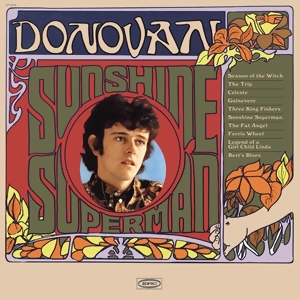
I've specified the US version of this album simply because it was the original album the way it was envisaged by Donovan and producer Mickie Most. Released in the US on 26 August 1966, the UK release was delayed because of a contractual dispute and by the time it was cleared for release in the UK, Donovan had already moved on to his next work. Consequently the version made available to the UK record buying public in June 1967 was rather different being a compilation of 'Sunshine Superman' and it's follow-up 'Mellow Yellow'.
Donovan himself became despondent at the thought of his 'masterpiece' not seeing the light of day but matters worsened when he was arrested in London for possession of drugs in June 1966. This prevented him from entering the US for a while and he was therefore unable to promote the release of the album and single of the same name. Disillusioned, he took off with a friend Gypsy Dave to the Greek island of Paros. It was only news that the single had reached number one in America that persuaded him to return.
The album was recorded between December 1965 and May 1966 at Columbia Studios, Hollywood and EMI Studios, Abbey Road, London and it marked a radical departure from the more folky influences of his first two releases. Whilst retaining some folk styles, 'Sunshine Superman' includes elements of jazz and Indian music along with musical and lyrical examples of what was becoming known as psychedelia. There were also developments in the musical accompaniment incorporating rock band backing (including on the title track, future Led Zeppelin members Jimmy Page and John Paul Jones), string and woodwind arrangements and exotic instruments such as sitar, harpsichord and bouzouki.
'Sunshine Superman'
Recorded at Abbey Road Studios (then still known simply as EMI Studios), this song featured renowned session guitarist Jimmy Page and on bass, his fellow future Led Zeppelin cohort, John Paul Jones. The recording session took place in January 1966 and the song was released as a single in the US (backed by 'The Trip') in July that year. The song was very different to Donovan's earlier singles such as 'Catch The Wind' and 'Colours' and is now regarded as one of the earliest examples of psychedelic music on record. The single reached number 1 in the US and after its delayed December 1966 release in the UK, it reached number 2.
'Legend Of A Girl Child Linda'
Donovan met and fell for Linda Lawrence in the Spring of 1965, however, having been the former girl friend of Rolling Stone, Brian Jones, she was reluctant to commit to a relationship with another musician. Consequently Donovan's love remained unrequited until the late 1960s, yet Linda provided the inspiration for several songs in that period. (The couple married on 2 October 1970 and remain together to this date). Written in Sweden, the 18 verse song is like a medieval fairy tale but is also a story of lost innocence in the tradition of William Blake. It was recorded at Abbey Road and features beautiful harpsichord, string and woodwind arrangements by John Cameron.
'Three Kingfishers'
Donovan sings here of twelve kingfishers and it transpired that the title was actually a typing error on the album sleeve! The song was recorded at Columbia Recording Studios, Hollywood featuring Texan singer-songwriter, Shawn Phillips on sitar.
'Ferris Wheel'
Another of the songs recorded in Hollywood, this again has Donovan backed by tasteful sitar and bongo drums. Although you may not know it from the psychedelic imagery in the lyrics, the song is purportedly about a girl getting her hair caught in a Ferris wheel and having to have it cut off. At least that's according to Donovan when he spoke to MOJO magazine in 2011.
'Bert's Blues'
Donovan pays homage to his friend and fellow Scottish folk musician, Bert Jansch with this track in which he even takes on some of Jansch's distinctive vocal mannerisms. The song was recorded at Abbey Road and featured another great John Cameron arrangement.
And so ends side one of the original vinyl album.
'Season Of The Witch'
Side two kicks off with another psychedelic masterpiece and even features Donovan on electric guitar rather than his trademark acoustic. The air of paranoia and menace indicated in the lyrics has made this song an ideal background piece for numerous films and the song has also been covered by countless other artists. Incidentally the organ during the instrumental break adds to the spooky feel of the song, yet no one seems to know who played it. Nevertheless the song was recorded in Hollywood.
'The Trip'
Although this song served as the B-side of the 'Sunshine Superman' single, it was a different mix featuring harmonica which is not included on the album version. Recorded in Hollywood, the title appears to come from the name of a music club called The Trip which opened in 1965 at 8572 Sunset Boulevard. Although short lived, live acts who played there included The Byrds and The Velvet Underground. Alternatively the song may be about an LSD trip. Whatever the influence, the song name checks Bob Dylan and a Julian who may well be the son of Linda Lawrence and Brian Jones.
'Guinevere'
For this gorgeous and haunting acoustic ballad, Donovan returns to an English medieval theme though the song was ironically recorded in Hollywood.
'Fat Angel'
Written for Mama Cass (Elliott) of American/Canadian group, The Mamas & The Papas, this song also mentions a relatively new west coast group, Jefferson Airplane who would later feature the song in their repertoire and include a live Fillmore East version on their live album 'Bless Its Pointed Little Head'. (Jefferson Airplane's first album, like 'Sunshine Superman' was also released in September 1966).
'Celeste'
The album closes with another lovely ballad inspired by Linda Lawrence and once again given a beautiful arrangement by John Cameron. The medieval theme from earlier songs is carried into this courtesy of the harpsichord instrumental break.
Although the US version of the album represented the work the way that Donovan envisaged it, the cover did not. At that time he was one of the few artists who was able to have a say in the artwork for his releases and for 'Sunshine Superman' he desired an illustration based upon the letter 'S'. While he was to get his way for the much later UK release (designed by Mick Taylor and Sheena McCall), his ideas were vetoed in the US where the record company preferred a photograph taken by Barry Feinstein, surrounded by a romantic Art Nouveau design by Dick Smith. Whatever the finished product looked like, the sales were certainly not adversely affected.
Despite the medieval subject of some of the lyrics, this was a very forward looking album and one which subsequently influenced artists on both sides of the Atlantic. Perhaps because of the problems associated with it's release and the fact that the US and UK versions were different, it has often been overlooked. The very fact that the release of some of these tracks was delayed in the UK resulted in the album seeming far less ahead of its time. That's a shame because the album as it was meant to be released is a true classic.
It should also be remembered that at the time Donovan was a very well respected writer and musician. The 1970s glam-rock, prog-rock and punk did not help his career but his influence during the 1960s certainly paved the way for the likes of The Incredible String Band. Also without teaching John Lennon and Paul McCartney some fingerpicking techniques in India, we might never have been treated to the guitar introduction to 'Blackbird' or to the descending picked introduction of 'Dear Prudence' (both on 'The Beatles', the White Album).
Friday, 8 March 2013
Paul Butterfield Blues Band - East-West
In the early 1960s. blues loving singer and harmonica player, Paul Butterfield joined forces with like minded guitarist Elvin Bishop and together they formed The Paul Butterfield Blues Band. The other members were bassist Jerome Arnold and drummer Sam Lay, both of whom had previously played in the backing band of Howlin' Wolf. Also recruited was another young blues guitarist, Mike Bloomfield.
The band achieved some level of notoriety when Bloomfield, Lay and Arnold accompanied Bob Dylan when he went 'electric' and horrified the folk purists at the 1965 Newport Folk Festival. After recruiting singer-songwriter Nick Gravenites, the band then recorded their first studio album, 'The Paul Butterfield Blues Band'.
Lay left the band due to illness and was replaced on drums by Billy Davenport before they commenced work recording their follow-up album in July 1966. For these sessions they would also be augmented by keyboard player Mark Naftalin.
The sessions took place at the famous Chess Studios sited at 2120 South Michigan Avenue, Chicago and the resulting album 'East-West' has become one of the most influential albums of the period. Strange you might think for an album that consisted mainly of blues covers, however well played they may be. What set 'East-West' apart however, were two tracks in which they extended themselves well beyond the parameters normally associated with the blues.

Side one of the album begins with:
'Walkin' Blues'
Like John Mayall's Blues Breakers and many other blues bands at that time, Butterfield was using songs that had been reissued in 1961, twenty three years after the death of their creator, Robert Johnson. This plodding blues number has been recorded by numerous artists over the year and this version is nothing particularly special but it does allow Butterfield to produce some good harmonica licks.
'Get Out Of My Life Woman'
Written by New Orleans musician Allen Toussaint, this song was more a vehicle for the piano work of Mark Naftalin but also features nice guitar fills from Bloomfield.
'I Got A Mind To Give Up Living'
This slow burning blues classic features some great guitar work. Butterfield sings words which I believe were written by BB King, 'I've got a mind to give up living, and go shopping instead.'
Wow, things must be bad!
'All These Blues'
Another traditional blues song which serves as a vehicle for some great harmonica work from Butterfield.
'Work Song'
Now we come to the first of the two songs which really make this album something special. Nat Adderley's instrumental is extended to an eight minute jam featuring more great harmonica from Butterfield, superb guitar solos from Bloomfield and even Bishop and Naftalin take solos. For the first time there are indications that this is more than your average blues/rock album as jazz influences begin to emerge. It may sound 'old hat' now but one must remember that this was before extended jams became commonplace thanks to the likes of Cream.
Side two of the albums commences with a Mike Nesmith composition.
'Mary Mary'
While Butterfield and colleagues were recording this song in Chicago in July 1966, composer Mike Nesmith was recording a version in Western Recorders, Hollywood with The Monkees. His version would be issued the following year on 'More Of The Monkees'.
'Two Trains Running'
Recording in Chess Studios the band obviously feel the influence of Muddy Waters. While the album opener was one of the first blues songs Waters learned to play, this song is one of his own compositions. A great band performance but the highlight is the Mike Bloomfield's guitar solo.
'Never Say No'
The shortest song on the album is a very slow traditional blues with lead vocals from Elvin Bishop. This leads into the longest track on the album.
'East-West'
According to Mark Naftalin, Mike Bloomfield was inspired to write this piece after experiencing an all night LSD trip. Whatever the drug influences, the musical influences are clearly based in the recent work of Miles Davis and John Coltrane where the music developed modally through scales rather than through chord progressions. Based upon a bass line from a Nick Gravenites song ('It's About Time'), Bloomfield developed the music in a way that no other blues band were doing at that time. It was more akin to Indian music built upon a drone rather than American blues.
The song had been developed over a period of several months prior to these recording sessions. It was certainly played live at the Whisky A Go Go in Hollywood in the winter of 1966 (probably January). Even by then it was pretty much fully formed and ran to a full 13 minutes. Opening deceptively as a blues/rock piece featuring Bloomfield on guitar and eventually Butterfield on harmonica, it builds to a crescendo before almost stopping abruptly. It then becomes something completely different as Bloomfield's guitar takes the casual blues listener to someplace they have never been before. The influence here is clearly eastern making the title 'East-West' wholly appropriate. Once more this section builds to a climax and is then followed by a more melodic part. Eventually this also builds and finally ends in a crashing conclusion, a flurry of notes and chords and Butterfield having the final say.
The impact of this music upon the general blues/pop fan at this time was cataclysmic. This was quite simply like nothing else that existed on record outside of jazz. Without any shadow of doubt it paved the way for bands like The Grateful Dead, Cream and Quicksilver Messenger Service to develop extended, improvised pieces both live and on their own subsequent recordings. For this reason alone it thoroughly deserves its place as one of the most influential albums of not only this period, but of all time.
The band achieved some level of notoriety when Bloomfield, Lay and Arnold accompanied Bob Dylan when he went 'electric' and horrified the folk purists at the 1965 Newport Folk Festival. After recruiting singer-songwriter Nick Gravenites, the band then recorded their first studio album, 'The Paul Butterfield Blues Band'.
Lay left the band due to illness and was replaced on drums by Billy Davenport before they commenced work recording their follow-up album in July 1966. For these sessions they would also be augmented by keyboard player Mark Naftalin.
The sessions took place at the famous Chess Studios sited at 2120 South Michigan Avenue, Chicago and the resulting album 'East-West' has become one of the most influential albums of the period. Strange you might think for an album that consisted mainly of blues covers, however well played they may be. What set 'East-West' apart however, were two tracks in which they extended themselves well beyond the parameters normally associated with the blues.
Side one of the album begins with:
'Walkin' Blues'
Like John Mayall's Blues Breakers and many other blues bands at that time, Butterfield was using songs that had been reissued in 1961, twenty three years after the death of their creator, Robert Johnson. This plodding blues number has been recorded by numerous artists over the year and this version is nothing particularly special but it does allow Butterfield to produce some good harmonica licks.
'Get Out Of My Life Woman'
Written by New Orleans musician Allen Toussaint, this song was more a vehicle for the piano work of Mark Naftalin but also features nice guitar fills from Bloomfield.
'I Got A Mind To Give Up Living'
This slow burning blues classic features some great guitar work. Butterfield sings words which I believe were written by BB King, 'I've got a mind to give up living, and go shopping instead.'
Wow, things must be bad!
'All These Blues'
Another traditional blues song which serves as a vehicle for some great harmonica work from Butterfield.
'Work Song'
Now we come to the first of the two songs which really make this album something special. Nat Adderley's instrumental is extended to an eight minute jam featuring more great harmonica from Butterfield, superb guitar solos from Bloomfield and even Bishop and Naftalin take solos. For the first time there are indications that this is more than your average blues/rock album as jazz influences begin to emerge. It may sound 'old hat' now but one must remember that this was before extended jams became commonplace thanks to the likes of Cream.
Side two of the albums commences with a Mike Nesmith composition.
'Mary Mary'
While Butterfield and colleagues were recording this song in Chicago in July 1966, composer Mike Nesmith was recording a version in Western Recorders, Hollywood with The Monkees. His version would be issued the following year on 'More Of The Monkees'.
'Two Trains Running'
Recording in Chess Studios the band obviously feel the influence of Muddy Waters. While the album opener was one of the first blues songs Waters learned to play, this song is one of his own compositions. A great band performance but the highlight is the Mike Bloomfield's guitar solo.
'Never Say No'
The shortest song on the album is a very slow traditional blues with lead vocals from Elvin Bishop. This leads into the longest track on the album.
'East-West'
According to Mark Naftalin, Mike Bloomfield was inspired to write this piece after experiencing an all night LSD trip. Whatever the drug influences, the musical influences are clearly based in the recent work of Miles Davis and John Coltrane where the music developed modally through scales rather than through chord progressions. Based upon a bass line from a Nick Gravenites song ('It's About Time'), Bloomfield developed the music in a way that no other blues band were doing at that time. It was more akin to Indian music built upon a drone rather than American blues.
The song had been developed over a period of several months prior to these recording sessions. It was certainly played live at the Whisky A Go Go in Hollywood in the winter of 1966 (probably January). Even by then it was pretty much fully formed and ran to a full 13 minutes. Opening deceptively as a blues/rock piece featuring Bloomfield on guitar and eventually Butterfield on harmonica, it builds to a crescendo before almost stopping abruptly. It then becomes something completely different as Bloomfield's guitar takes the casual blues listener to someplace they have never been before. The influence here is clearly eastern making the title 'East-West' wholly appropriate. Once more this section builds to a climax and is then followed by a more melodic part. Eventually this also builds and finally ends in a crashing conclusion, a flurry of notes and chords and Butterfield having the final say.
The impact of this music upon the general blues/pop fan at this time was cataclysmic. This was quite simply like nothing else that existed on record outside of jazz. Without any shadow of doubt it paved the way for bands like The Grateful Dead, Cream and Quicksilver Messenger Service to develop extended, improvised pieces both live and on their own subsequent recordings. For this reason alone it thoroughly deserves its place as one of the most influential albums of not only this period, but of all time.
Tuesday, 5 March 2013
The Beatles - Revolver

At 8.00 pm on Wednesday 6 April 1966, The Beatles convened in Studio Three at EMI Studios, Abbey Road, to commence work on a song then known simply as 'Mark 1'. It was the first song to be recorded for their as then unnamed next album. The song became 'Tomorrow Never Knows' and the album became 'Revolver'.
It should be remembered that at that time, The Beatles were still very much a live touring band and after having written and recorded 'Rubber Soul' during October and November 1965, they set off on a series of nine concerts in ten days during December. The three months between then and the beginning of April 1966, was probably the longest period of inactivity the group had had since hitting the big time. Not that that time was wasted. Clearly Lennon, McCartney and Harrison had been busy writing and the luxury of having more time to develop their music certainly shows. While 'Revolver' is a logical progression from 'Rubber Soul', it is also a giant leap forward.
At this point, I would just like to pause to emphasise one fact that I find quite remarkable. Take a listen to the album 'Please Please Me' followed immediately by 'Revolver'. Then remind yourself that between the 11 February 1963 recording session for the first album and the 6 April 1966, was a period of only 1,151 days! I find it incredible that so much change could occur in so short a time scale.
When, twelve months later, The Beatles would record 'Sgt Pepper's Lonely Hearts Club Band', they were no longer a touring band, had clearly been influenced by the likes of 'Pet Sounds' and 'Freak Out!' and had the luxury of taking as much time as they wanted in the studio to perfect their art. 'Revolver' on the other hand had to be completed by 24 June at the latest, as they were then flying to Munich to commence what would become their penultimate tour. (Their final tour began in Chicago on 12 August and ended at Candlestick Park, San Francisco on 29 August).
Despite these pressures, they managed to produce an album which many regard as their absolute finest.
'Taxman'
George Harrison was to have three of his compositions feature on 'Revolver', more than on any other Beatles album up to that point. 'Taxman' is the first of these. Recording began on 20 April but the following day a complete remake was recorded in 11 takes and eventually overdubs including the count-in introduction were added on 16 May. Backward guitar parts (soon to become a regular feature of Beatles recordings) were added on 21 June.
While the song is credited to George Harrison, Paul McCartney should receive a special mention for his bass guitar work that drives the rhythm and also for playing the guitar part that closes the song. While I would highly recommend this album in any format, listening to this track in mono really emphasises the astonishing bass playing of McCartney.
'Eleanor Rigby'
More than any other Beatles album to date, 'Revolver' is about contrast and different musical styles. Witness the complete change in style between the rocky album opener and this beautiful song featuring Paul's voice backed by a double string quartet. Prior to recording, George Martin requested that the string ensemble run through the piece first with vibrato and then again without. Both he and Paul McCartney agreed that the piece played straight made for a more dramatic accompaniment.
The track was recorded over two days beginning on Thursday 28 April but with an additional vocal added on 6 June (this being the 'Ah look at all the lonely people' refrain).
Comparisons between the mono and stereo versions of this song reveal how little care and attention went into creating the stereo mix. The stereo version is quite literally strewn with sloppy errors. For example, as Paul sings the first syllable of Eleanor, the ADT is left switched on and is suddenly switched off midway through the word. More distracting was the decision to have the main vocals panned to the right side something which jars particularly when listening on headphones. The mono version is of course, perfect.
The song was destined to be released as a single on the same date (5 August) as the album.
'I'm Only Sleeping'
It is something of an anomaly that this song is musically by no means slow, yet still evokes the lazy feel described in the song lyrics. This is achieved in part by Lennon's somnolent sounding vocal and in even greater part by Harrison's backward guitar solo. Recording of this number began on Wednesday 27 April, a vocal was added two days later and the backward guitars and backing vocals were added at two sessions on 5 and 6 May. The backward guitar was achieved, not by recording a part normally and then playing the tape in reverse, but rather by George Martin writing out a guitar part in reverse and George Harrison playing that.
A rehearsal version included on The Beatles Anthology Volume 2 reveals that at one stage a vibraphone was included in the instrumentation but this was clearly dropped for the final recording.
Three tracks in, this happens to be the first instrumental contribution to the album by John Lennon.
'Love You To'
Four tracks into the album and already George Harrison is presenting his second song and once again, John Lennon is missing altogether. When recording began on 11 April, this song was unnamed but eventually was dubbed 'Granny Smith' before receiving it's final title.
Despite the use of sitar on 'Norwegian Wood', this was Harrison's first real venture into Indian music.
Differences between mono and stereo mixes are few but mono listeners are treated to an extra thirteen seconds during the fadeout.
'Here, There And Everywhere'
One could be forgiven for thinking that with this beautiful song, Paul McCartney was attempting to emulate what Brian Wilson was doing on 'Pet Sounds'. However, 'Pet Sounds' had only been released in the US one month before the first recording date for this song (Tuesday 14 June 1966) and wasn't released in the UK until July 1966. In his interesting book 'The Beatles In Mono', Andrew Hickey points out that the drum sound in parts seems to emulate the timpani sound that Brian Wilson was using in songs such as 'Wouldn't It Be Nice' and 'I'm Waiting For The Day'. In his book 'The Long Player, Goodbye' Travis Elborough suggests that McCartney attended a 'Pet Sounds' listening session at London's Hilton Hotel and then returned home to start work on this song, however no date is given and there appears to be no other evidence to support this theory.
Whatever the influence for the song, it is an astonishing piece of music and performance, whatever you may think of the sentimentality of the lyrics.
The final take of the song was completed on 16 June with John Lennon present but not actually playing. Paul gave his voice a fragile quality by singing the song in the wistful, breathy style of Marianne Faithfull.
'Yellow Submarine'
Those who dispute the fact that 'Revolver' is the greatest Beatles album, usually point to this track as their evidence. While it is a nothing more than a children's song, it is a very well produced children's song, taking a whole twelve hours of recording time on 26 May and 1 June. The June recording date featured contributions from the likes of Marianne Faithfull, Brian Jones, Patti Harrison and even the Beatles chauffer Alf Bicknell! Packed with a wide variety of sound effects and possibly Ringo's best vocal performance up to that time, the overall effect is quite contagious and as Ian MacDonald says in 'Revolution In The Head', it is 'impossible to dislike'. It also gives a psychological lift to side one of the album after the sad tale of the loneliness and death of 'Eleanor Rigby' and the following track in which Lennon sings 'I know what it's like to be dead.'
'She Said She Said'
Ending side one of the original album, this song began life as a much slower acoustic demo with Lennon singing the lines inspired by a late night conversation he had with the American actor, Peter Fonda. The actor bored and irritated Lennon with a tale of having a near death experience after an operation but somehow the words quoted above, stuck in Lennon's mind. The fact that Lennon was having an LSD trip at the time probably helped. This song was recorded in three takes at the very last session for the album. This took place on Tuesday 21 June 1966. While the lyrics may have intrigued the average teenage Beatles fan in the summer of 1966, it was the music that made this a truly great addition to this album. Subtle rhythm changes, fantastic guitar playing and awesome drum and cymbal work from Ringo make this a fitting end to side one.
Curiously, according to the book 'Revolver: How The Beatles Reimagined Rock'n'Roll' by Robert Rodriguez, Paul McCartney had stormed out of the sessions and did not feature at all on this track. The bass was played by George Harrison.
Flip over now for side two.
'Good Day Sunshine'
'Revolver' represents a peak in the creativity of Paul McCartney as a songwriter, with John Lennon beginning to take something of a back seat. Beginning side two of the album is yet another McCartney song where, aside from some hand claps, Lennon takes no part instrumentally. A very upbeat song which reflects the wonderful summer weather of 1966, this is yet another fine piece of work yet is arguably the least ambitious recording on the whole album. It was recorded essentially in one day (8 June) with overdubs added the following day.
'And Your Bird Can Sing'
The first version of this was recorded on 20 April but almost from the beginning, John and Paul dissolve into hysterical laughter. Released on 'Anthology 2', this version demonstrates the influence of the jingle-jangle sound of US band The Byrds through the use of the 12-string Rickenbacker guitar. Another version was recorded on Tuesday 26 April. The words of the song have never really been explained but writer John Lennon dismissed the work as 'fancy paper around an empty box.' Whatever Lennon's thoughts, this is another song which utilises the fine interaction between electric guitar and bass in similar fashion to 'Rain' which was also recorded at these April 1966 sessions. To my mind, these songs exemplify the sound of the 'Revolver' album.
'For No One'
One wonders just how many superb compositions Paul McCartney can produce on one record. This is his third astonishing piece on 'Revolver' and is arguably his most mature composition to date. Recording began on 9 May, continued on 16 May and was concluded on 19 May with the addition of a piece written and played on French horn by distinguished session musician, Alan Civil. Originally titled 'Why Did It Die?' the title was possibly changed because of the numerous references to death on side one of the album. Lennon and Harrison played no part in the recording of this song.
In my opinion, McCartney never produced anything as good as this again as his later 'big ballads' began to become rather over sentimental for my tastes.
'Dr Robert'
Another song that was predominantly written by John Lennon and which again features that distinctive guitar sound. However this is a genuine band performance with all Beatles involved. It was a relatively straight forward recording on 17 and 19 April.
The subject of the song may have been Dr. Robert Freymann who provided amphetamines and vitamins to his rich and famous clients (in 1955 he signed the death certificate for jazz legend, Charlie Parker).
'I Want To Tell You'
Originally given the throw away title 'Laxton's Superb' by engineer Geoff Emerick, this song was recorded relatively quickly on 2 and 3 June 1966. The third Harrison song to feature on the album is perhaps most noteworthy for the discordant chord that occurs at the end of each line, giving the song a jarring feel. John Lennon later borrowed this chord to use on 'I Want You (She's So Heavy)'. Paul McCartney plays bass and piano on the track while John Lennon instrumentally contributes only tambourine and hand claps.
'Got To Get You Into My Life'
As upbeat as the opening track of side two, but whereas McCartney admitted a Lovin' Spoonful influence for 'Good Day Sunshine', the influence here is clearly the Stax/Tamla Motown soul sound. While McCartney had this song prepared before the sessions began, he appears to have been unclear as to how to present it. At the very first recording session on 7 April 1966, it was an acoustic number but by the time he returned to the song on 18 May, he had decided to utilise a brass section including two members of Georgie Fame's backing group, The Blue Flames. One of the early takes is included on 'The Beatles Anthology 2' and with it's sparse organ, acoustic guitar and drum arrangement, it is a totally different sounding song to the final released version.
'Tomorrow Never Knows'
Ironically the final song on the album was the first to be attempted in the studio on 7 April. Also ironically it is the most advanced sounding piece on the album as well as being the most advanced of all the recordings attempted by The Beatles up to that date. Known originally as 'Mark One' the first version from 7 April is very different, yet just as compelling as the final released version completed on 22 April. Inspired by Lennon's use of the drug LSD and his simultaneous reading of 'The Tibetan Book Of The Dead', this piece of music was as far removed from 'She Loves You', recorded only three years earlier, as it is possible to imagine. The track is perhaps most notable for three things. First, Ringo Starr's hypnotic thumping drum patterns. Second the use of tape loops to create weird and wonderful effects to voices and instruments and third, the voice of John Lennon which almost achieves the sound he had in his head of thousands of Tibetan monks chanting on a mountain top.
Hearing the piece today, it is difficult if not impossible to imagine the effect this music had on 'pop' fans in the mid 1960's. If parents and their kids had not been divided in their opinions on The Beatles up to this point, they certainly were now.

The album was released in the UK on 5 August 1966 but it's US release contained only 11 tracks as 3 had been used on an earlier album. The effect of this in the US was to diminish even further the contribution of John Lennon. With it's iconic front cover design by German musician and artist, Klaus Voorman and the incredible music contained in the fourteen UK tracks, 'Revolver' had a massive impact on the music world. From here on, albums would gradually become as important and eventually more important than singles. The Beatles would cease to be a touring band and would hereafter concentrate their energies on perfecting their music in the studios. Things would never be quite the same again.
Monday, 25 February 2013
John Mayall with Eric Clapton - Blues Breakers
In early 1966, there were two bands vying for the attention of blues lovers in London and the UK. They were The Yardbirds and the band led by John Mayall. Imagine the excitement therefore when 'The Yardbirds' (later known as 'Roger The Engineer') was released on 15 July 1966, followed three days later by 'Blues Breakers' by John Mayall featuring guitar 'God' Eric Clapton. However, while The Yardbirds were moving away from their blues roots and released an album consisting solely of their own compositions, Mayall remained true to his roots. For me, there is no competition. 'Blues Breakers' wins hands down!

By 1966, Mayall was already 33 years old and having served his national service in Korea and been a student at Manchester College of Art during which period he played with a number of semi-professional bands, he decided in 1963 to devote himself to music full time. Hence The Bluesbreakers were formed. In 1964, Mayall with Hughie Flint on drums, John McVie on bass and Roger Dean on guitar, backed John Lee Hooker on his tour of Britain. A recording contract with Decca Records followed and a live album was recorded at Klooks Kleek in December 1964. It did not sell well and the contract was terminated.
Then, in March 1965, The Yardbirds scored a major hit with the Graham Gouldman song 'For Your Love'. After two years with the group, guitarist Eric Clapton decided they were not moving in the direction he wished, so he replaced Roger Dean in the more blues oriented Bluesbreakers. There were some live dates which attracted a great deal of attention but then Clapton left to travel to Greece. Peter Green was drafted into The Bluesbreakers but eventually Clapton returned and the band went into Decca Studios in March 1966.
The original intention had been to record a live album, but attempts to do so at London's Flamingo Club (with Jack Bruce on bass) ended in poor quality recordings so the band resorted to recording in Decca Studios in West Hampstead, London.
The tracks recorded were mainly drawn from their live repertoire of blues standards by people like Ray Charles, Little Walter, Otis Rush and Freddie King, however they also included four Mayall compositions and one joint composition by Mayall and Clapton. The iconic cover showed the four rather glum looking band members seated on a kerb side in front of a graffiti scrawled wall. Clapton is reading a copy of a popular UK children's comic called 'The Beano', leading to the LP becoming known as The Beano album.
The band play well and are clearly a tight unit with Mayall demonstrating his multi instrumental skills on piano, Hammond organ and harmonica. They are also augmented by a few session players on horns. Essentially however, the album is a showcase for the guitar talents of Eric Clapton.

'All Your Love'
The album kicks of with the distinctive slide guitar opening to this great Otis Rush song. Originally written and recorded by Rush in 1958, the full title was 'All Your Love (I Miss Loving)'. A fairly basic twelve bar blues, it is a great vehicle for Clapton's guitar work and a number of other artists have either covered it or ripped it off. Peter Green, Clapton's replacement in the Bluesbreakers later wrote the hit song 'Black Magic Woman' which he acknowledged was basically a re-write of 'All Your Love'.
'Hideaway'
This instrumental written by Freddie King and Sonny Thompson was first released as a single by King in 1960 and thereafter became something of a staple for aspiring blues artists. King himself has acknowledged that the song was adapted from 'Taylor's Boogie' by Hound Dog Taylor though he may have taken a later adaptation of the song by Magic Sam and Shakey Jake Harris. Eric Clapton had been familiar with King's version for a few years when he recorded his with Mayall using a slightly jazzier rhythm than the original.
'Little Girl'
This catchy little Mayall composition promises the girl of the title that she can forget about the eighteen years of pain she has been through because Mayall is going to leave her with a love child! I'm not sure how that would have gone down with any feminists who were around in 1966 but it's a catchy number nonetheless.
'Another Man'
Coming in at fifteen seconds under two minutes, this inconsequential Mayall composition has little to say. Basically 'Another man done gone', he's 'on the country farm' and 'didn't know his name'. There is no guitar on the track which is redeemed by some fine harmonica vamping from Mayall.
'Double Crossing Time'
Written jointly by Mayall and Clapton, this is a song about being cheated and betrayed. Allegedly it was written in response to Jack Bruce turning his back on Mayall to join successful 'pop' group, Manfred Mann. Mayall lays down the piano backing leaving Clapton to play some fine lines on his then trademark Gibson Les Paul.
'What'd I Say'
This 1959 song broke Ray Charles into the charts and gained him a great deal of attention among both white and black audiences. Mayall plays some fine piano and Hammond organ and even Hughie Flint gets in on the act with a drum solo, while Eric Clapton is restricted to a short but blistering guitar solo. Towards the end he uses the guitar riff from The Beatles' 'Daytripper'.
Side two of the original vinyl album began with another John Mayall composition -
'Key To Love'
The brass accompaniment from John Almond, Alan Skidmore and Derek Healey, really help to keep this track rocking as does the great guitar break from Clapton. A great start to side two.
'Parchman Farm'
Bukka White and Son House had both written and performed blues songs about the Mississippi State Penitentiary (known as Parchman Farm) but this is a cover of a later Mose Allison song that had featured on his 1963 album, 'Mose Allison Sings'. John McVie drives the rhythm on bass while Mayall blows some great harmonica between his vocals. According to Mayall, his young guitar protege found the riff too boring so he sat this one out.
'Have You Heard'
The longest track on the album is a great slow blues composition in the key of C by John Mayall. Introduced by the saxophones of Almond and Skidmore with a plodding bass line from McVie, Mayall eventually comes in on vocals and is answered by great guitar work from you know who. It's a superb band performance and one of Mayall's strongest early compositions.
'Rambling On My Mind'
Being a great fan of Robert Johnson, it was probably Clapton's idea to include this song originally dating from Johnson's November 1936 session. Clapton takes his only vocal on this album (also his first solo lead vocal on record) and of course plays great Delta blues guitar with fine piano backing from Mayall.
'Steppin' Out'
Written by James Bracken (co-owner and founder of Vee-Jay Records), this blues instrumental was obviously a great favourite of Eric Clapton as he continued to perform it with Cream, often going into free-form jazz arrangements with Jack Bruce and Ginger Baker lasting up to fifteen minutes. Here, he keeps it down to 2 minutes 30 seconds but packs a lot into that time backed by vamping horns and organ. Mayall even manages to squeeze in one short Hammond organ solo before Clapton is back taking the song to it's glorious climax.
'It Ain't Right'
As one would expect on a Little Walter song, Mayall's wailing harmonica features very heavily on the album's closing track.
The album was very influential, inspiring a number of other bands to pursue the blues. Unusually for a blues album, it also made the UK top ten. Mayall was soon to lose Eric Clapton to 'greater' things but he continued to lead his own band and continually selected the best young musicians to support him. The list of musicians who worked with Mayall, reads like a 'who's who' of UK blues music. He also remained true to his roots and never deviated from playing the music he loved most.
Postscript
In 2006, a 40th Anniversary Deluxe Edition was issued featuring both stereo and mono versions of the album along with a host of singles and live sessions from around this period.
By 1966, Mayall was already 33 years old and having served his national service in Korea and been a student at Manchester College of Art during which period he played with a number of semi-professional bands, he decided in 1963 to devote himself to music full time. Hence The Bluesbreakers were formed. In 1964, Mayall with Hughie Flint on drums, John McVie on bass and Roger Dean on guitar, backed John Lee Hooker on his tour of Britain. A recording contract with Decca Records followed and a live album was recorded at Klooks Kleek in December 1964. It did not sell well and the contract was terminated.
Then, in March 1965, The Yardbirds scored a major hit with the Graham Gouldman song 'For Your Love'. After two years with the group, guitarist Eric Clapton decided they were not moving in the direction he wished, so he replaced Roger Dean in the more blues oriented Bluesbreakers. There were some live dates which attracted a great deal of attention but then Clapton left to travel to Greece. Peter Green was drafted into The Bluesbreakers but eventually Clapton returned and the band went into Decca Studios in March 1966.
The original intention had been to record a live album, but attempts to do so at London's Flamingo Club (with Jack Bruce on bass) ended in poor quality recordings so the band resorted to recording in Decca Studios in West Hampstead, London.
The tracks recorded were mainly drawn from their live repertoire of blues standards by people like Ray Charles, Little Walter, Otis Rush and Freddie King, however they also included four Mayall compositions and one joint composition by Mayall and Clapton. The iconic cover showed the four rather glum looking band members seated on a kerb side in front of a graffiti scrawled wall. Clapton is reading a copy of a popular UK children's comic called 'The Beano', leading to the LP becoming known as The Beano album.
The band play well and are clearly a tight unit with Mayall demonstrating his multi instrumental skills on piano, Hammond organ and harmonica. They are also augmented by a few session players on horns. Essentially however, the album is a showcase for the guitar talents of Eric Clapton.
'All Your Love'
The album kicks of with the distinctive slide guitar opening to this great Otis Rush song. Originally written and recorded by Rush in 1958, the full title was 'All Your Love (I Miss Loving)'. A fairly basic twelve bar blues, it is a great vehicle for Clapton's guitar work and a number of other artists have either covered it or ripped it off. Peter Green, Clapton's replacement in the Bluesbreakers later wrote the hit song 'Black Magic Woman' which he acknowledged was basically a re-write of 'All Your Love'.
'Hideaway'
This instrumental written by Freddie King and Sonny Thompson was first released as a single by King in 1960 and thereafter became something of a staple for aspiring blues artists. King himself has acknowledged that the song was adapted from 'Taylor's Boogie' by Hound Dog Taylor though he may have taken a later adaptation of the song by Magic Sam and Shakey Jake Harris. Eric Clapton had been familiar with King's version for a few years when he recorded his with Mayall using a slightly jazzier rhythm than the original.
'Little Girl'
This catchy little Mayall composition promises the girl of the title that she can forget about the eighteen years of pain she has been through because Mayall is going to leave her with a love child! I'm not sure how that would have gone down with any feminists who were around in 1966 but it's a catchy number nonetheless.
'Another Man'
Coming in at fifteen seconds under two minutes, this inconsequential Mayall composition has little to say. Basically 'Another man done gone', he's 'on the country farm' and 'didn't know his name'. There is no guitar on the track which is redeemed by some fine harmonica vamping from Mayall.
'Double Crossing Time'
Written jointly by Mayall and Clapton, this is a song about being cheated and betrayed. Allegedly it was written in response to Jack Bruce turning his back on Mayall to join successful 'pop' group, Manfred Mann. Mayall lays down the piano backing leaving Clapton to play some fine lines on his then trademark Gibson Les Paul.
'What'd I Say'
This 1959 song broke Ray Charles into the charts and gained him a great deal of attention among both white and black audiences. Mayall plays some fine piano and Hammond organ and even Hughie Flint gets in on the act with a drum solo, while Eric Clapton is restricted to a short but blistering guitar solo. Towards the end he uses the guitar riff from The Beatles' 'Daytripper'.
Side two of the original vinyl album began with another John Mayall composition -
'Key To Love'
The brass accompaniment from John Almond, Alan Skidmore and Derek Healey, really help to keep this track rocking as does the great guitar break from Clapton. A great start to side two.
'Parchman Farm'
Bukka White and Son House had both written and performed blues songs about the Mississippi State Penitentiary (known as Parchman Farm) but this is a cover of a later Mose Allison song that had featured on his 1963 album, 'Mose Allison Sings'. John McVie drives the rhythm on bass while Mayall blows some great harmonica between his vocals. According to Mayall, his young guitar protege found the riff too boring so he sat this one out.
'Have You Heard'
The longest track on the album is a great slow blues composition in the key of C by John Mayall. Introduced by the saxophones of Almond and Skidmore with a plodding bass line from McVie, Mayall eventually comes in on vocals and is answered by great guitar work from you know who. It's a superb band performance and one of Mayall's strongest early compositions.
'Rambling On My Mind'
Being a great fan of Robert Johnson, it was probably Clapton's idea to include this song originally dating from Johnson's November 1936 session. Clapton takes his only vocal on this album (also his first solo lead vocal on record) and of course plays great Delta blues guitar with fine piano backing from Mayall.
'Steppin' Out'
Written by James Bracken (co-owner and founder of Vee-Jay Records), this blues instrumental was obviously a great favourite of Eric Clapton as he continued to perform it with Cream, often going into free-form jazz arrangements with Jack Bruce and Ginger Baker lasting up to fifteen minutes. Here, he keeps it down to 2 minutes 30 seconds but packs a lot into that time backed by vamping horns and organ. Mayall even manages to squeeze in one short Hammond organ solo before Clapton is back taking the song to it's glorious climax.
'It Ain't Right'
As one would expect on a Little Walter song, Mayall's wailing harmonica features very heavily on the album's closing track.
The album was very influential, inspiring a number of other bands to pursue the blues. Unusually for a blues album, it also made the UK top ten. Mayall was soon to lose Eric Clapton to 'greater' things but he continued to lead his own band and continually selected the best young musicians to support him. The list of musicians who worked with Mayall, reads like a 'who's who' of UK blues music. He also remained true to his roots and never deviated from playing the music he loved most.
Postscript
In 2006, a 40th Anniversary Deluxe Edition was issued featuring both stereo and mono versions of the album along with a host of singles and live sessions from around this period.
Friday, 22 February 2013
The Mothers Of Invention - Freak Out!
Besides The Beach Boys' 'Pet Sounds' , another 1966 album that appears to have influenced The Beatles, is 'Freak Out!' credited to The Mothers Of Invention. According to Ian MacDonald in his excellent 'Revolution in the Head', Paul McCartney regarded 'Sgt Pepper's Lonely Hearts Club Band' as 'our 'Freak Out!''
Released by Verve on 27 June 1966, it competes with 'Blonde On Blonde' for being the first double rock LP. (although in the UK the original release was only a single disc). Besides that, it is also cited as being one of the first concept albums though there is not one single unifying theme. As leader Frank Zappa wrote in 'The Real Frank Zappa Book', the idea was that 'each tune had a function within an overall satirical concept'

Ray Collins sang with an R&B covers band called the Soul Giants. After losing their guitar player, Frank Zappa was drafted into the band and they gradually began playing his original material. The Soul Giants morphed into The Mothers and as such they came to the attention of MGM producer, Tom Wilson. As a staff producer for Columbia Records, Wilson had earlier produced three albums for Bob Dylan and also worked with Sun Ra and Simon & Garfunkel. Having heard only one song, 'Trouble Every Day', Wilson believed The Mothers to be a white blues band. His opinion changed when he heard them record 'Who Are The Brain Police?' Nevertheless, he must have been suitably impressed as he managed to secure an almost unlimited budget to record the album by this unknown group. One problem was the group's name which MGM were not happy with. Thus it became The Mothers Of Invention.
The recording sessions took place at TTG Studios in Hollywood between 9 and 12 March 1966. (In his book 'Dangerous Kitchen: The Subversive World of Frank Zappa', Kevin Courrier claims that the album was recorded over three months between November 1965 and January 1966. This seems unlikely as Tom Wilson did not spot The Mothers until November 1965 and signed them to Verve on 1 March 1966). Although an advance of $2,500 dollars had been negotiated, this had not been forthcoming by the time the sessions commenced. So it was that a starving band began recording 'Any Way The Wind Blows' and 'Who Are The Brain Police?' As Wilson became even more enthusiastic, Zappa chanced his arm and asked to rent $500 worth of percussion equipment. Wilson agreed and a crazy session commenced at midnight on Friday 11 March involving all the freaks from Sunset Boulevard crowded into the studio. That prompted manager Herb Cohen to ask 'What the hell you gonna do with all those drums at 1.00 in the morning?' The result was the final track on the double album 'The Return Of The Son Of Monster Magnet' despite the band not having the time to finish it. The total cost for the album ran to $21,000, far exceeding the normal $5,000 for a debut album. Effectively, Wilson put his job on the line to make this record.
It is impossible to categorise the music on 'Freak Out!' as it veers between pop, doo-wop, avant garde jazz, psychedelic rock and other trends that are impossible to label. Go listen to the album now - yes, do as you're told and then remind yourself that despite the technical limitations, this music was recorded in 1966.
These are the 'songs' that appeared on the double version of that iconic release:
'Hungry Freaks, Daddy'
According to the sleeve notes, this song was written for the self styled leader of the LA 'freak' scene, Carl Franzoni, described as being freaky down to his toe nails. Beginning with a riff that rips off The Rolling Stones' 'Satisfaction' released the previous year, the song sets the tone for this album and possibly for the rest of Zappa's career. In 1964 US President, Lyndon B Johnson used the term 'Great Society' to describe his vision of an ideal America. The freaks turned their backs on such a vision prompting Zappa to write the lyrics, 'Philosophy that turns away from those who aren't afraid to say what's on their mind. The left-behinds, of the Great Society.' As good a song as 'Satisfaction' is, this knocks it into a cocked hat.
'I Ain't Got No Heart'
On the album sleeve, Zappa calls this song 'a summary of my feelings on social-sexual relationships'. Using many of the cliches used in love songs, The Mothers deliver an anti-love song with lines like 'no angels singing up above today' and 'Why should I be stuck with you? It's just not what I want to do.' Overall it's a great pop song but so far there has been nothing so drastically different to other things going on in the world of pop albums. All that changes with the third track.
'Who Are The Brain Police?'
Beginning with a doom-laden two-note bass introduction, the sound of creaking doors accompany Ray Collins' groaning voice. 'What will you do if we let you go home? And the plastic's all melted and so has the chrome.' Then higher register voices appear creepily asking 'Who are the brain police?' After the second verse, the song goes into a free-form section where background voices repeat 'I think I'm going to die.' The song even includes a portion which is cut from side three's 'Help I'm A Rock'.
This is one creepy, scary song and even Frank Zappa agreed to being scared when he 'finally played it out loud and sang the words.' Now we know that we are not listening to any run of the mill pop record.
No sooner does this end when the mood changes dramatically with:
'Go Cry On Somebody Else's Shoulder'
Following a semi-spoken introduction the listener is transported back to the 1950's with a doo-wop anti-love song. As Zappa says in the sleeve notes, 'This is very greasy. You should not listen to it. You should wear it on your hair. Behind all the vocals listen out for some lovely tinkling piano accompaniment and tasteful vibes.
'Motherly Love'
A musical come on to the hoards of groupies that followed bands around. The title may be a double entendre but the lyrics are clear enough.
'How Could I Be Such A Fool'
Like 'Go Cry On Somebody Else's Shoulder', this is another song of betrayal. A love ballad that constantly changes tempo and features some lush mariachi sounding trumpet behind the final verse.
And so ends side one which features some fine pop songs sandwiching the very strange 'Brain Police'.
Side two begins with the very jaunty and uptempo
'Wowie Zowie'
Another song in the doo-wop style beloved of Zappa, this would just be another goofy pop song in the style of 'Wooly Bully' were it not for some of the lyrics. Zappa writes in the sleeve notes that 'This is carefully designed to suck the twelve year old listener into our camp.' Musically it is most notable for some great xylophone playing.
'You Didn't Try To Call Me'
As Zappa says, this 'is not revolutionary, but is interesting.' Personally I really like the melody which I gather was actually put together in the studio unlike the following song which Zappa wrote in about 1963.
'Any Way The Wind Blows'
An accessible pop song that was written while Zappa was considering divorcing his first wife Kay Sherman.
'I'm Not Satisfied'
According to Zappa, this is okay and safe. He's spot on as it is the weakest 'song' on the album.
'You're Probably Wondering Why I'm Here'
The second side of the album ends with Zappa turning the tables on his audience. Having lured them into a false sense of security with the previous three songs, he hits out.
Rather arrogantly and contemptuously, he sings 'I think your life is incomplete, but maybe that's not for me to say. They only pay me here to play.'
Effectively Zappa was trying to shake up the record buying public and those who attended live shows, into not just accepting what was served up to them. Musically the song is interesting for some demented bass vocals and crazy kazoo playing.
'Trouble Every Day'
This song begins side three and was the song heard by Tom Wilson convincing him he was signing a white blues band. Inspired by the riots that took place the previous August in the Watts neighbourhood of Los Angeles, resulting in 34 deaths; this was Zappa's response to the racial unrest. A straight forward bluesy rocker, I wonder how much this might have been on John Lennon's mind when he came up with 'Revolution'.
From here on in, the album starts to get a bit 'weird'.
'Help, I'm A Rock'
Despite being dedicated to Elvis Presley, this piece about not accepting alienation appears to be a reply to the Paul Simon 1965 song 'I Am A Rock'. A monotonous beat pounds as some gibberish words are sung. This leads into the repetitive chant of the title. This segues into:
'It Can't Happen Here'
This is the craziest and least harmonic barber-shop quartet you've ever heard in your life. Eventually Zappa addresses the fictitious character Suzy Creamcheese. His advances are well and truly rejected.
The final side of the album is taken up by one piece of 'music'.
'The Return Of The Son Of Monster Magnet'
This was the unfinished ballet inspired by Edgard Varese and Igor Stravinsky, that required the rental of $500 dollars worth of percussion equipment. Basically it is twelve minutes of screaming, yelping and nonsense lyrics. Like The Beatles' 'Revolution 9' it is a piece I rarely played then and never play now.
The cover of the album listed some 170 people who had somehow inspired Frank Zappa and his music. According to Zappa, the list was intended to help those wishing to understand the album. This kind of acknowledgement of influences was a theme that The Beatles would use graphically on the cover of 'Sgt Pepper's Lonely Hearts Club Band'.
Upon it's release, the album received some scathing reviews and according to 'The Real Frank Zappa Book', the initial sales amounted to 30,000 units. The accounting statement indicated that the band owed MGM money! However, the album has grown in status since then and as Simpsons creator Matt Groening has said, 'It was crude and ugly, and incredibly sophisticated.'
There was certainly something in there for everyone.
A host of session musicians are listed on the album cover as The Mothers' Auxiliary and there were some additional musicians who were never credited. The Mothers Of Invention at that time were:
Frank Zappa - musical director, guitar & vocals
Ray Collins - Lead vocalist, harmonica, tambourine, finger cymbals, bobby pin & tweezers Jim Black - Drums (also sings in some foreign language)
Roy Estrada - Bass & guitarron; boy soprano
Elliot Ingber - Alternate lead & rhythm guitar with clear white light

Postscript:
In 2006, to commemorate the 40th anniversary of 'Freak Out!', the Zappa Family Trust issued 'The MOFO Project/Object' which offers the original stereo mix of 'Freak Out!' as well as a host of unreleased material. It comes in both 2 and 4 CD versions and in my opinion is definitely worth getting.
Released by Verve on 27 June 1966, it competes with 'Blonde On Blonde' for being the first double rock LP. (although in the UK the original release was only a single disc). Besides that, it is also cited as being one of the first concept albums though there is not one single unifying theme. As leader Frank Zappa wrote in 'The Real Frank Zappa Book', the idea was that 'each tune had a function within an overall satirical concept'

Ray Collins sang with an R&B covers band called the Soul Giants. After losing their guitar player, Frank Zappa was drafted into the band and they gradually began playing his original material. The Soul Giants morphed into The Mothers and as such they came to the attention of MGM producer, Tom Wilson. As a staff producer for Columbia Records, Wilson had earlier produced three albums for Bob Dylan and also worked with Sun Ra and Simon & Garfunkel. Having heard only one song, 'Trouble Every Day', Wilson believed The Mothers to be a white blues band. His opinion changed when he heard them record 'Who Are The Brain Police?' Nevertheless, he must have been suitably impressed as he managed to secure an almost unlimited budget to record the album by this unknown group. One problem was the group's name which MGM were not happy with. Thus it became The Mothers Of Invention.
The recording sessions took place at TTG Studios in Hollywood between 9 and 12 March 1966. (In his book 'Dangerous Kitchen: The Subversive World of Frank Zappa', Kevin Courrier claims that the album was recorded over three months between November 1965 and January 1966. This seems unlikely as Tom Wilson did not spot The Mothers until November 1965 and signed them to Verve on 1 March 1966). Although an advance of $2,500 dollars had been negotiated, this had not been forthcoming by the time the sessions commenced. So it was that a starving band began recording 'Any Way The Wind Blows' and 'Who Are The Brain Police?' As Wilson became even more enthusiastic, Zappa chanced his arm and asked to rent $500 worth of percussion equipment. Wilson agreed and a crazy session commenced at midnight on Friday 11 March involving all the freaks from Sunset Boulevard crowded into the studio. That prompted manager Herb Cohen to ask 'What the hell you gonna do with all those drums at 1.00 in the morning?' The result was the final track on the double album 'The Return Of The Son Of Monster Magnet' despite the band not having the time to finish it. The total cost for the album ran to $21,000, far exceeding the normal $5,000 for a debut album. Effectively, Wilson put his job on the line to make this record.
It is impossible to categorise the music on 'Freak Out!' as it veers between pop, doo-wop, avant garde jazz, psychedelic rock and other trends that are impossible to label. Go listen to the album now - yes, do as you're told and then remind yourself that despite the technical limitations, this music was recorded in 1966.
These are the 'songs' that appeared on the double version of that iconic release:
'Hungry Freaks, Daddy'
According to the sleeve notes, this song was written for the self styled leader of the LA 'freak' scene, Carl Franzoni, described as being freaky down to his toe nails. Beginning with a riff that rips off The Rolling Stones' 'Satisfaction' released the previous year, the song sets the tone for this album and possibly for the rest of Zappa's career. In 1964 US President, Lyndon B Johnson used the term 'Great Society' to describe his vision of an ideal America. The freaks turned their backs on such a vision prompting Zappa to write the lyrics, 'Philosophy that turns away from those who aren't afraid to say what's on their mind. The left-behinds, of the Great Society.' As good a song as 'Satisfaction' is, this knocks it into a cocked hat.
'I Ain't Got No Heart'
On the album sleeve, Zappa calls this song 'a summary of my feelings on social-sexual relationships'. Using many of the cliches used in love songs, The Mothers deliver an anti-love song with lines like 'no angels singing up above today' and 'Why should I be stuck with you? It's just not what I want to do.' Overall it's a great pop song but so far there has been nothing so drastically different to other things going on in the world of pop albums. All that changes with the third track.
'Who Are The Brain Police?'
Beginning with a doom-laden two-note bass introduction, the sound of creaking doors accompany Ray Collins' groaning voice. 'What will you do if we let you go home? And the plastic's all melted and so has the chrome.' Then higher register voices appear creepily asking 'Who are the brain police?' After the second verse, the song goes into a free-form section where background voices repeat 'I think I'm going to die.' The song even includes a portion which is cut from side three's 'Help I'm A Rock'.
This is one creepy, scary song and even Frank Zappa agreed to being scared when he 'finally played it out loud and sang the words.' Now we know that we are not listening to any run of the mill pop record.
No sooner does this end when the mood changes dramatically with:
'Go Cry On Somebody Else's Shoulder'
Following a semi-spoken introduction the listener is transported back to the 1950's with a doo-wop anti-love song. As Zappa says in the sleeve notes, 'This is very greasy. You should not listen to it. You should wear it on your hair. Behind all the vocals listen out for some lovely tinkling piano accompaniment and tasteful vibes.
'Motherly Love'
A musical come on to the hoards of groupies that followed bands around. The title may be a double entendre but the lyrics are clear enough.
'How Could I Be Such A Fool'
Like 'Go Cry On Somebody Else's Shoulder', this is another song of betrayal. A love ballad that constantly changes tempo and features some lush mariachi sounding trumpet behind the final verse.
And so ends side one which features some fine pop songs sandwiching the very strange 'Brain Police'.
Side two begins with the very jaunty and uptempo
'Wowie Zowie'
Another song in the doo-wop style beloved of Zappa, this would just be another goofy pop song in the style of 'Wooly Bully' were it not for some of the lyrics. Zappa writes in the sleeve notes that 'This is carefully designed to suck the twelve year old listener into our camp.' Musically it is most notable for some great xylophone playing.
'You Didn't Try To Call Me'
As Zappa says, this 'is not revolutionary, but is interesting.' Personally I really like the melody which I gather was actually put together in the studio unlike the following song which Zappa wrote in about 1963.
'Any Way The Wind Blows'
An accessible pop song that was written while Zappa was considering divorcing his first wife Kay Sherman.
'I'm Not Satisfied'
According to Zappa, this is okay and safe. He's spot on as it is the weakest 'song' on the album.
'You're Probably Wondering Why I'm Here'
The second side of the album ends with Zappa turning the tables on his audience. Having lured them into a false sense of security with the previous three songs, he hits out.
Rather arrogantly and contemptuously, he sings 'I think your life is incomplete, but maybe that's not for me to say. They only pay me here to play.'
Effectively Zappa was trying to shake up the record buying public and those who attended live shows, into not just accepting what was served up to them. Musically the song is interesting for some demented bass vocals and crazy kazoo playing.
'Trouble Every Day'
This song begins side three and was the song heard by Tom Wilson convincing him he was signing a white blues band. Inspired by the riots that took place the previous August in the Watts neighbourhood of Los Angeles, resulting in 34 deaths; this was Zappa's response to the racial unrest. A straight forward bluesy rocker, I wonder how much this might have been on John Lennon's mind when he came up with 'Revolution'.
From here on in, the album starts to get a bit 'weird'.
'Help, I'm A Rock'
Despite being dedicated to Elvis Presley, this piece about not accepting alienation appears to be a reply to the Paul Simon 1965 song 'I Am A Rock'. A monotonous beat pounds as some gibberish words are sung. This leads into the repetitive chant of the title. This segues into:
'It Can't Happen Here'
This is the craziest and least harmonic barber-shop quartet you've ever heard in your life. Eventually Zappa addresses the fictitious character Suzy Creamcheese. His advances are well and truly rejected.
The final side of the album is taken up by one piece of 'music'.
'The Return Of The Son Of Monster Magnet'
This was the unfinished ballet inspired by Edgard Varese and Igor Stravinsky, that required the rental of $500 dollars worth of percussion equipment. Basically it is twelve minutes of screaming, yelping and nonsense lyrics. Like The Beatles' 'Revolution 9' it is a piece I rarely played then and never play now.
The cover of the album listed some 170 people who had somehow inspired Frank Zappa and his music. According to Zappa, the list was intended to help those wishing to understand the album. This kind of acknowledgement of influences was a theme that The Beatles would use graphically on the cover of 'Sgt Pepper's Lonely Hearts Club Band'.
Upon it's release, the album received some scathing reviews and according to 'The Real Frank Zappa Book', the initial sales amounted to 30,000 units. The accounting statement indicated that the band owed MGM money! However, the album has grown in status since then and as Simpsons creator Matt Groening has said, 'It was crude and ugly, and incredibly sophisticated.'
There was certainly something in there for everyone.
A host of session musicians are listed on the album cover as The Mothers' Auxiliary and there were some additional musicians who were never credited. The Mothers Of Invention at that time were:
Frank Zappa - musical director, guitar & vocals
Ray Collins - Lead vocalist, harmonica, tambourine, finger cymbals, bobby pin & tweezers Jim Black - Drums (also sings in some foreign language)
Roy Estrada - Bass & guitarron; boy soprano
Elliot Ingber - Alternate lead & rhythm guitar with clear white light
Postscript:
In 2006, to commemorate the 40th anniversary of 'Freak Out!', the Zappa Family Trust issued 'The MOFO Project/Object' which offers the original stereo mix of 'Freak Out!' as well as a host of unreleased material. It comes in both 2 and 4 CD versions and in my opinion is definitely worth getting.
Subscribe to:
Posts (Atom)